
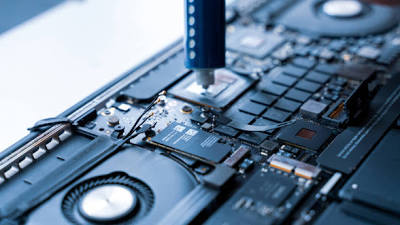
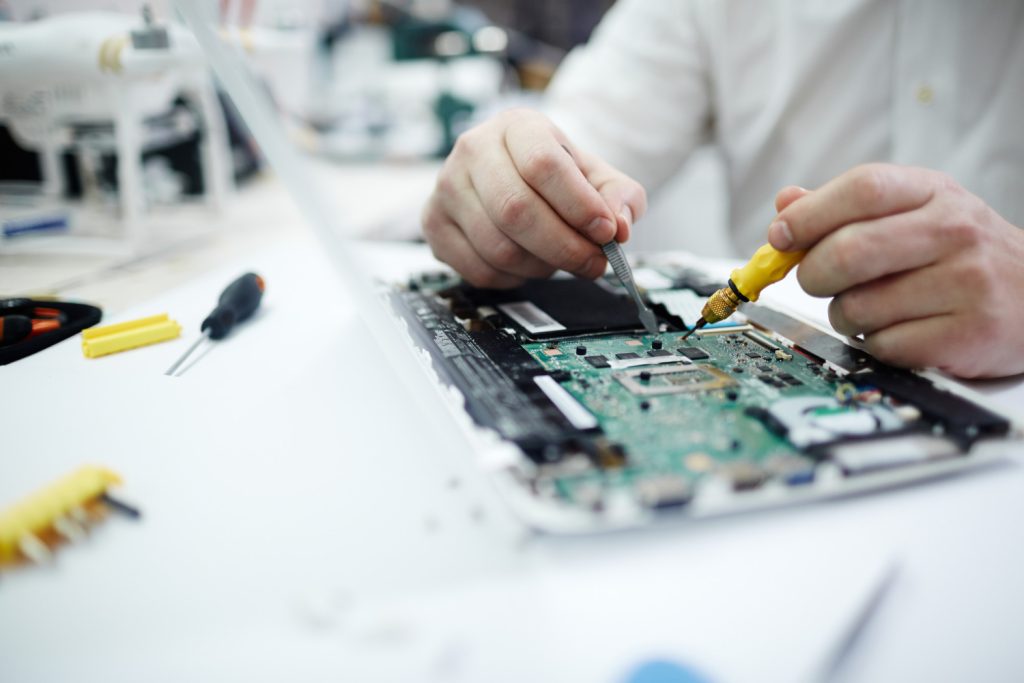
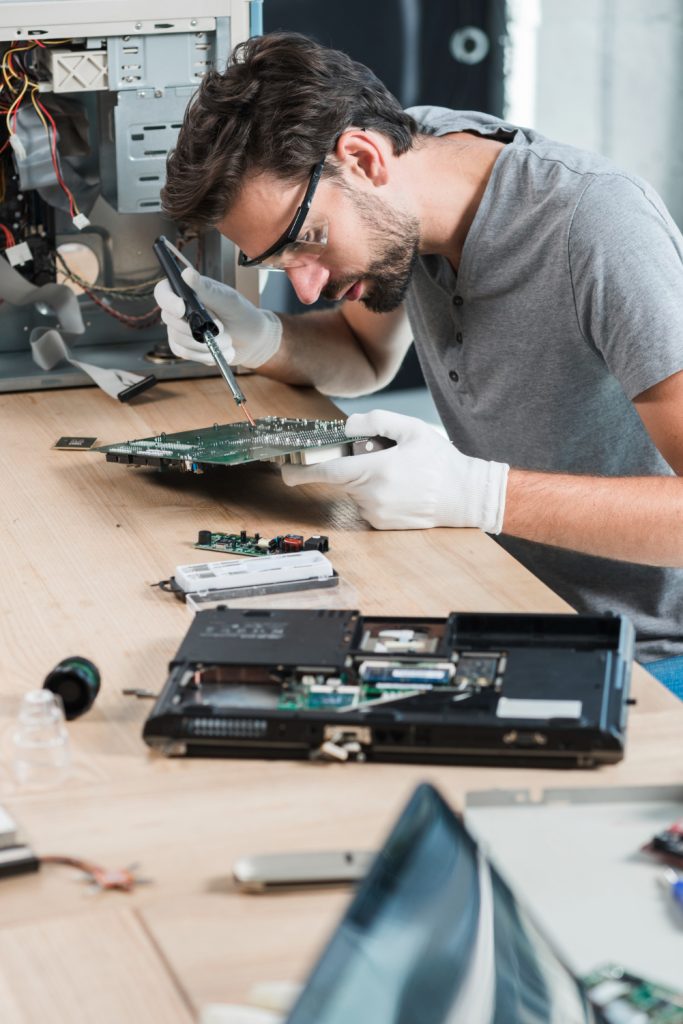
The Electronics Technology program supports a wide variety of electronic systems. This accredited program prepares students with the necessary skills to become technicians in several critical electronic-related industries. Students are introduced to a wide variety of tools, instruments, power supplies, signal generators, practices, and procedures. The program uses a competency-based hands-on approach, with other teaching methods that will be employed throughout. Internationally recognized IPC certifications are available in this program. This program prepares students to pass a nationally recognized Certified Electronics Technician exam.
Objectives
- Demonstrate a working knowledge of electronic systems, prototyping, maintenance, and repair techniques.
- Apply system diagnostics and troubleshooting techniques.
- Read, utilize, and design schematics.
- Demonstrate competency in thru-hole and surface mount soldering for electronic assemblies.
- Demonstrate competency in Analog and Digital circuit concepts, component characteristics, circuit prototyping, and testing.
- Implement and properly use a variety of precision electronic measurement tools and procedures.
- Demonstrate a working knowledge of safety practices and procedures
With rural revitalization and industrial upgrading, a single electrical perspective can no longer meet diversified energy demands. Meanwhile, rapid growth of distributed resources such as photovoltaics, storage, and biomass enables multi-energy complementarity. This paper proposes a hierarchical distributed optimization framework for Rural Distributed